
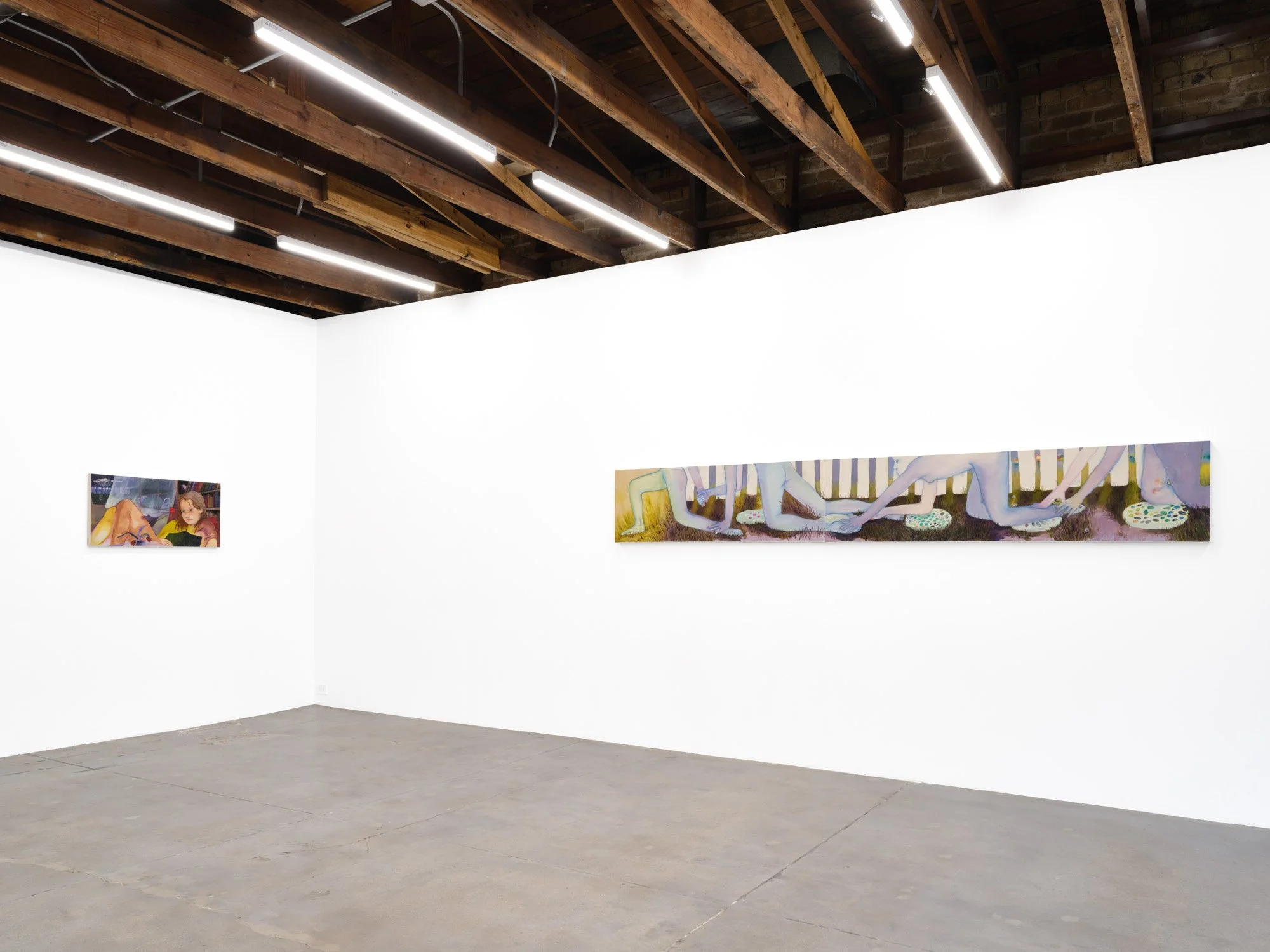
Rowan Howe’s Onely
May 9-June 6, 2026
Innocence is a funny thing.
Queer theorist Lee Edelman identifies that it is the innocent child that structures our politics, to whom we orient our future. And yet—the conception of the child and the sanctity of innocence we have today is a modern construction, from the eighteenth and nineteenth centuries in direct relation to capitalism and sex: Labor was illegalized for those under 10; school became mandatory for children ages 5–13; and children became known as “innocent” and “pure,” even as they were, especially young girls, intensely sexualized in art and culture.
James R. Kincaid asserts that purity is figured “as negation”—as the absence of sexuality, rather than an active quality. The pure child can thus be filled to our imagination’s content; the child and her innocence, then, is figured as intensely desirable, even as this desire is adamantly disavowed. The problem is that the child eventually grows up, eventually learns of sex, and loses her purity and innocence, thus losing the protection that those qualities (or absences) promise.
Rowan Howe poses a counterpoint to that negation by offering a vision into the young girl’s presexual life. Her work has long offered a vision into the awkward burgeoning sexuality of girlhood; for her show Onely at Martha’s, however, she takes us even earlier, into the more introductory, yet-to-be-understood feelings of childhood. In her work, the child, rather than a category, becomes a person.
In her work, Howe attempts to make sense of her own early sexualization. As a child in Chicago, Howe was confronted with Balthus’ Girl with Cat (1937), an earlier but deeply similar iteration of his more famous Thérèse Dreaming (1938), which features a young girl sitting in a chair, leg up, revealing undergarments under an upturned skirt, a cat by her side. The metaphor of the cat for something that will here go unnamed is a longstanding one in the history of art.
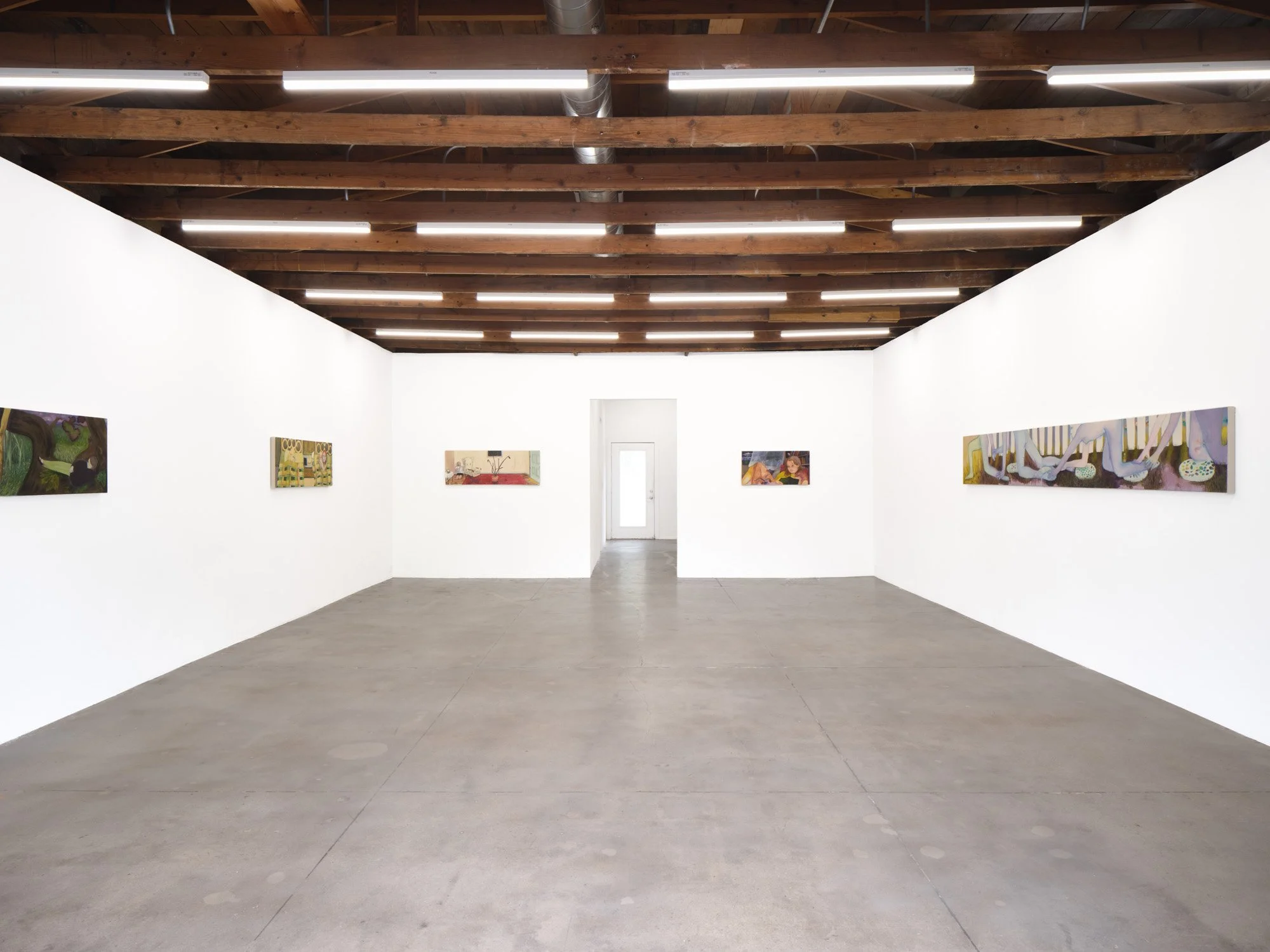
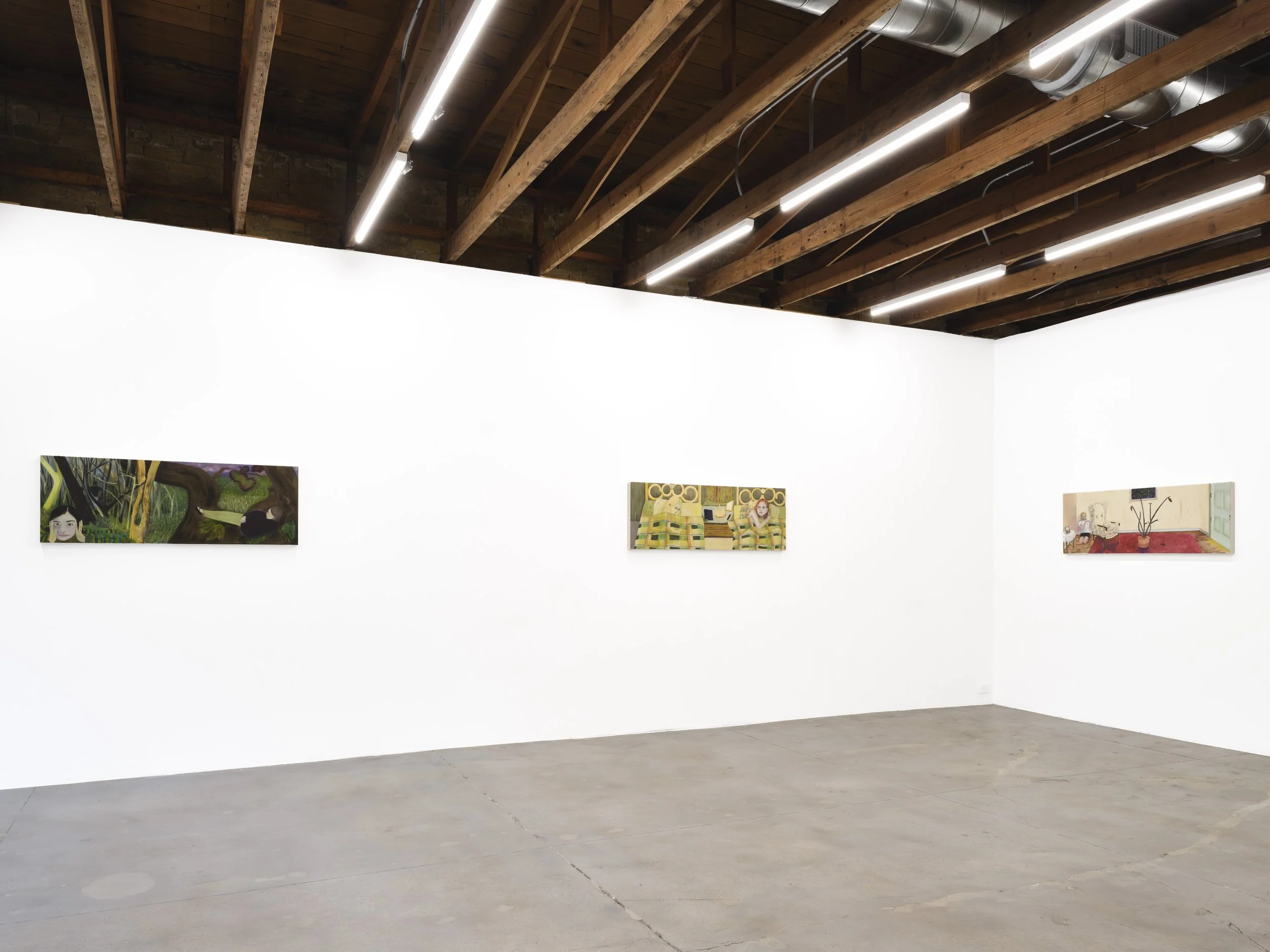
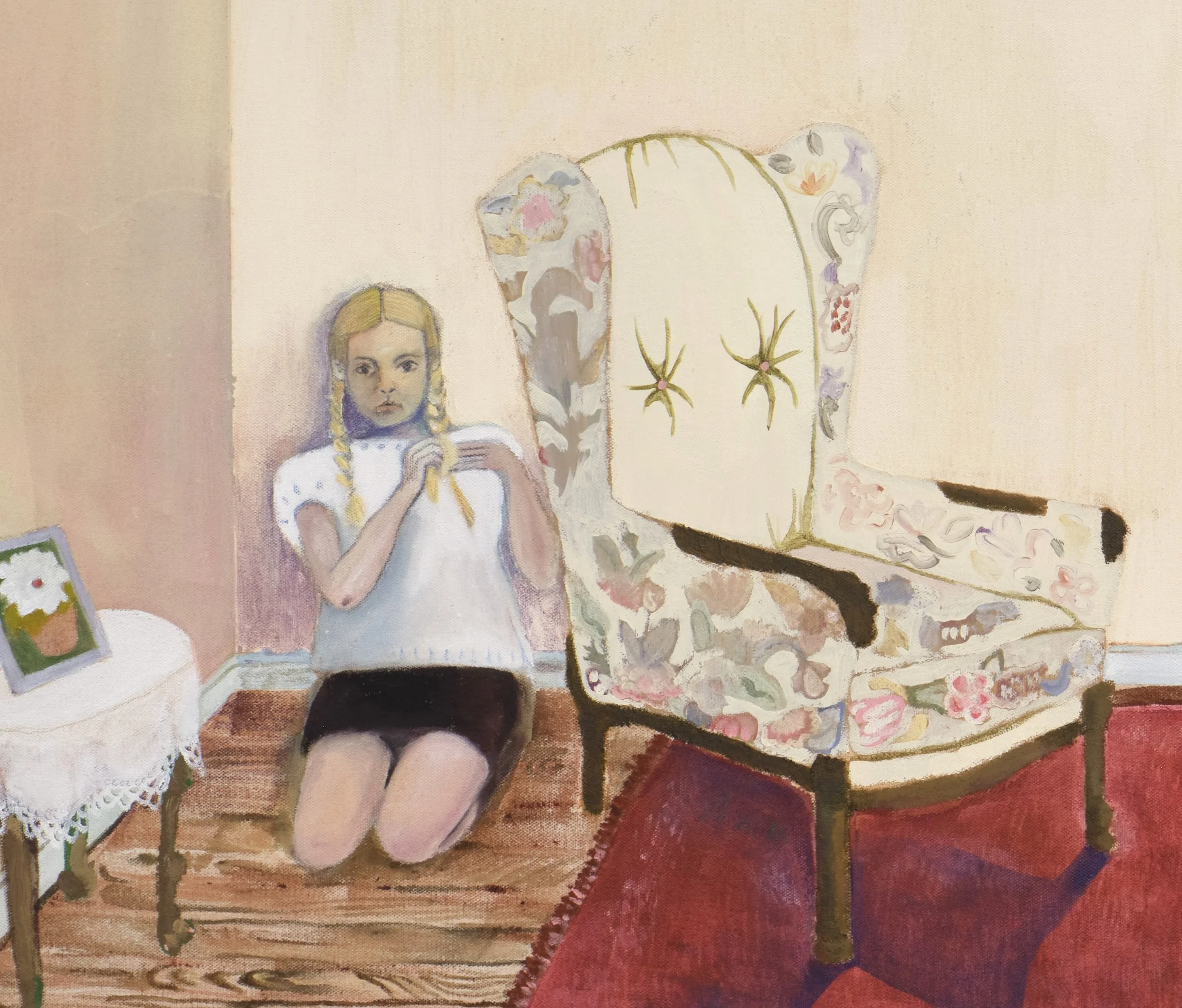
In Low Light Plants (2026), Howe seems to speak directly to Girl with Cat. Howe’s girl has moved from the chair and shrunk into a corner, her skirt now covering all it needs to cover. But her stare is blank; we have caught her in discomfort, rather than the revelry of daydream. The interior pictured, at first glance harmless, becomes foreboding. It is reminiscent of Dante Gabriel Rossetti’s Ecce Ancilla Domini! (1850), an Annunciation painting that figures Mary as a scared young girl, rather than a triumphant woman, ready to take on the responsibility of mothering God’s son.
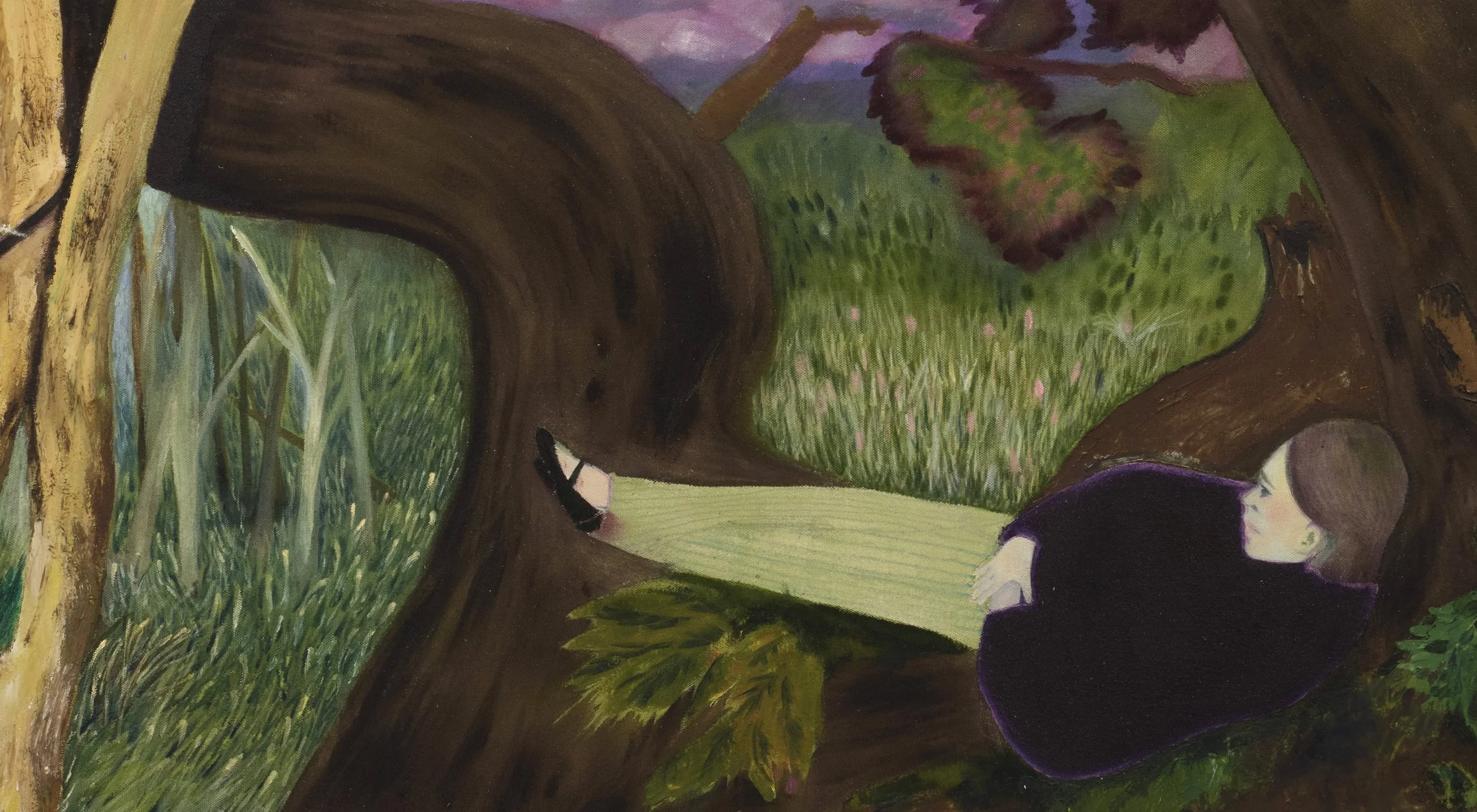
Interiors are relatively new for Howe but feature largely in Onely. Where past paintings have focused on an unplaceable environment, either marked by the natural or an ambient nature that stands outside of time and space, the works in Onely place us solidly into the domestic—a domestic of some ambiguous past, with wood-paneled walls and plaid sheets: a past of childhood, rather than a certain year. When Howe does take the viewer outside, the composition becomes dreamlike. The relationship between the figures in Interior Worlds (2026) renders the space an apparition. But who dreams this place? The girl staring straight out, making eye contact, renders the viewer complicit. Do we dream? Or are we unreal?
Grounders (2026) features a train of children crawling, grasping each other’s’ ankles to move as one. But they move over concrete stones studded with colorful marbles. One feels the pain of these children in their knees, the result of a willing childhood game reminiscent of the punishment of kneeling on grains of rice.
Onely, Howe reveals, is a name for an only child. Just one letter off from “lonely,” the title expresses that feeling—even when pictured in pairs or more, the figures don’t seem to know how to interact. Their dynamics lie somewhere between real interaction and parallel play, more careful, measured, almost paranoid observation than the tenderness of friends.
Perhaps it is because they are attempting to learn from each other how to be—how to be children, how to be girls, how to be sexual when the time comes for it. Howe’s figures feature skin of sickly colors and outlines separating their bodies from the external world; in this way, they seem placed in, not quite real—pre-digital avatars. And perhaps that is what girlhood is: a costume, a performance, a taking on of a being other than your own. Yet in Howe’s works, these avatars crack, the performance fails. In this way, Howe’s work, in its eschewal of the naturalism of a seamless performance, is less about the imagery than the affect, the “ugly feelings” of loneliness, of awkwardness, of getting it not-quite-right, of innocence not yet lost but fading, quicker every day.
Text by Grace Sparapani
Onely's opening reception will be held from 7:00 to 9:00 PM on May 9, 2026, and will be on view through June 6, 2026, Friday-Saturday 12-6 PM, or by appointment.
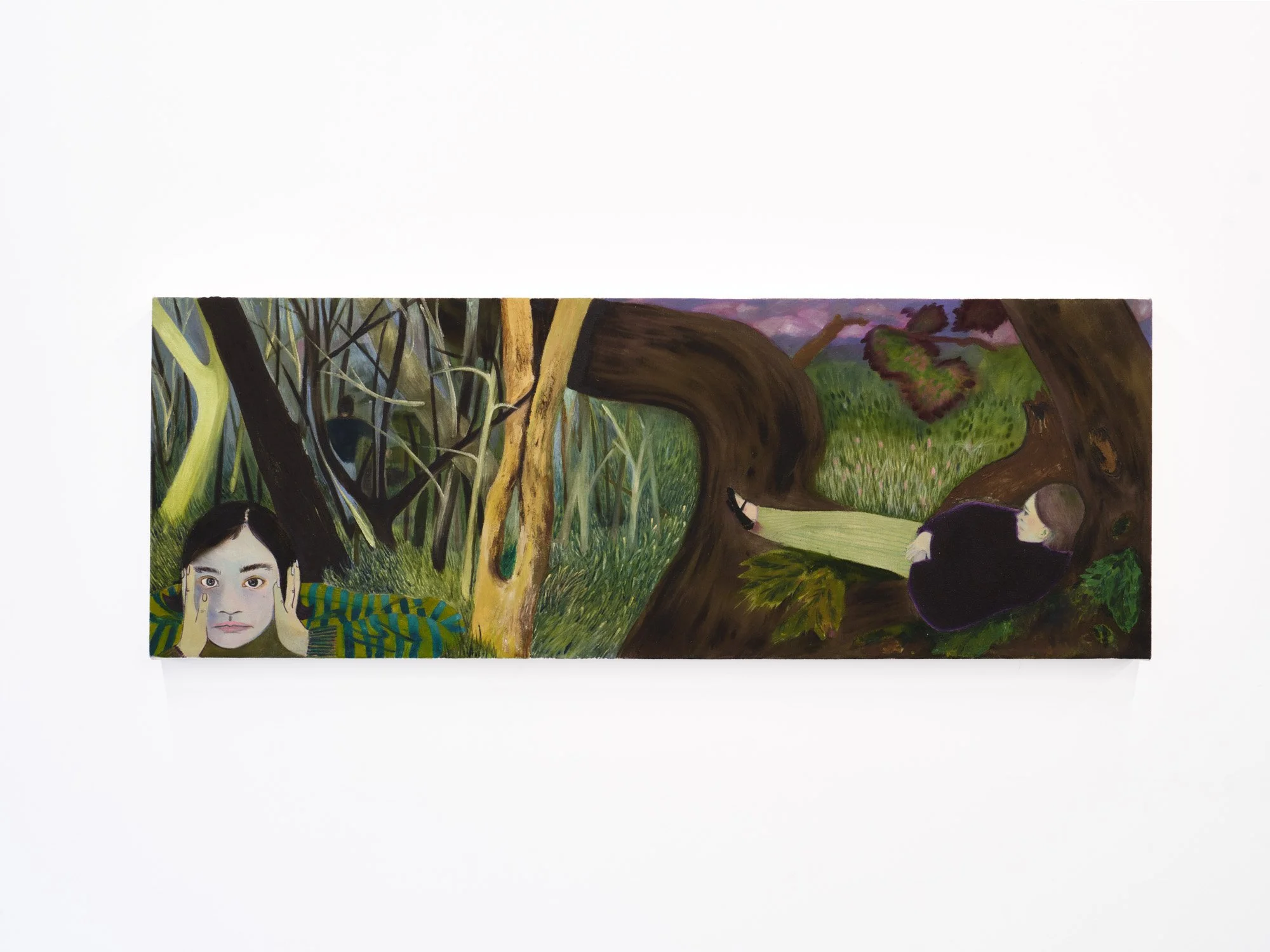
Rowan Howe
Interior Worlds, 2026
Acrylic, watercolor pencil, and oil on canvas
18 x 50 inches
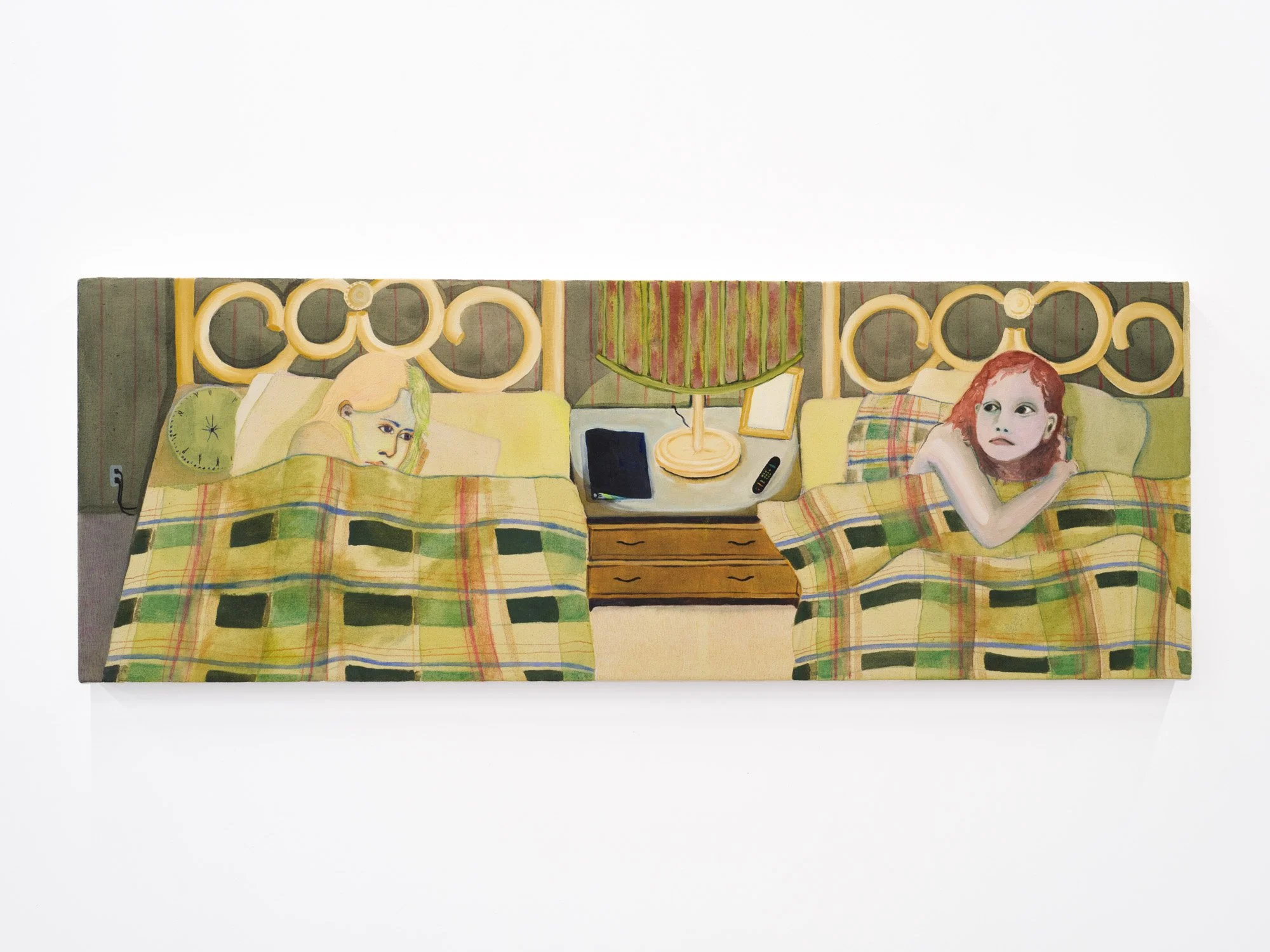
Rowan Howe
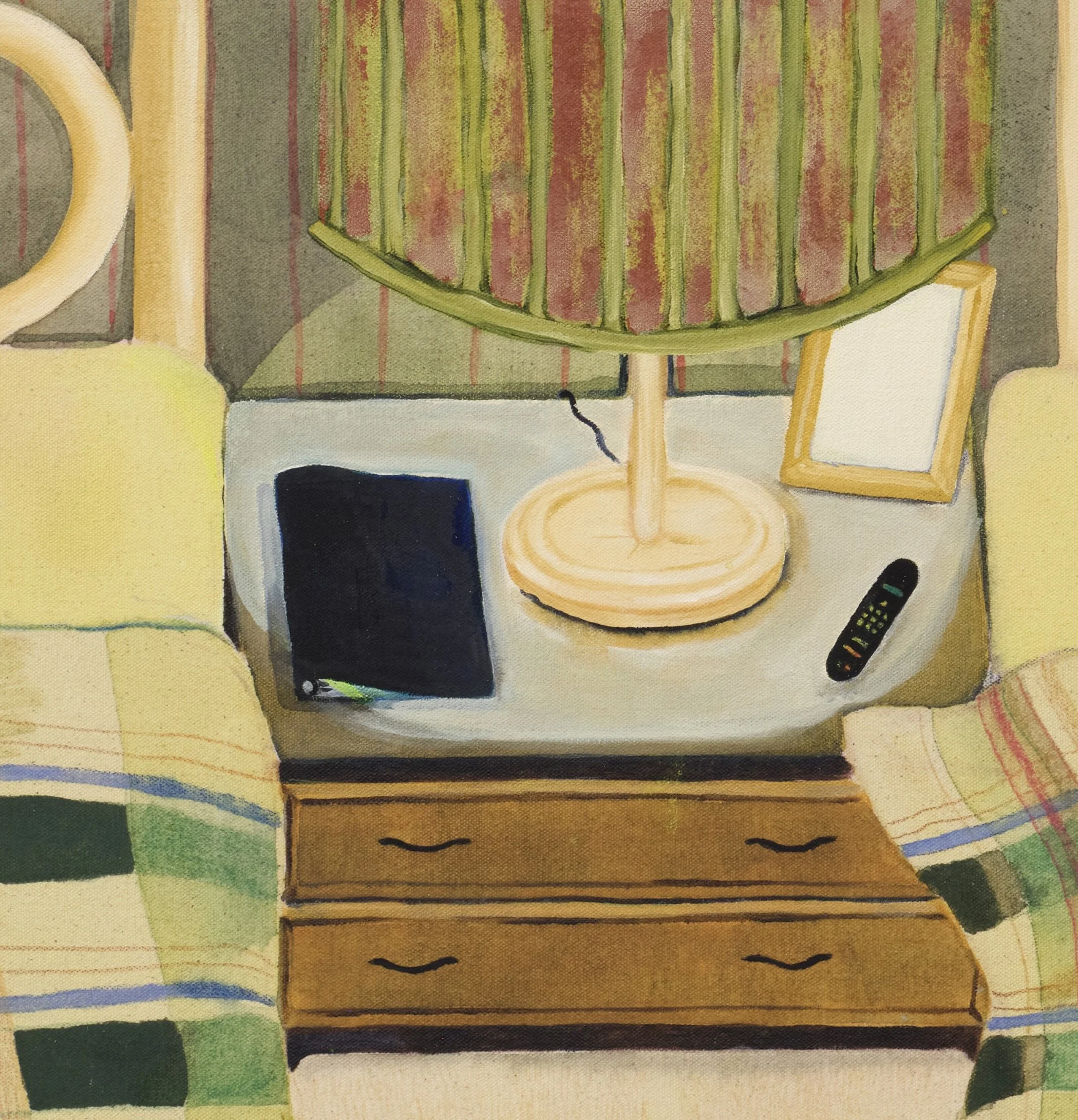
Double Twin, 2026
Acrylic, watercolor pencil, and oil on canvas
18 x 50 inches
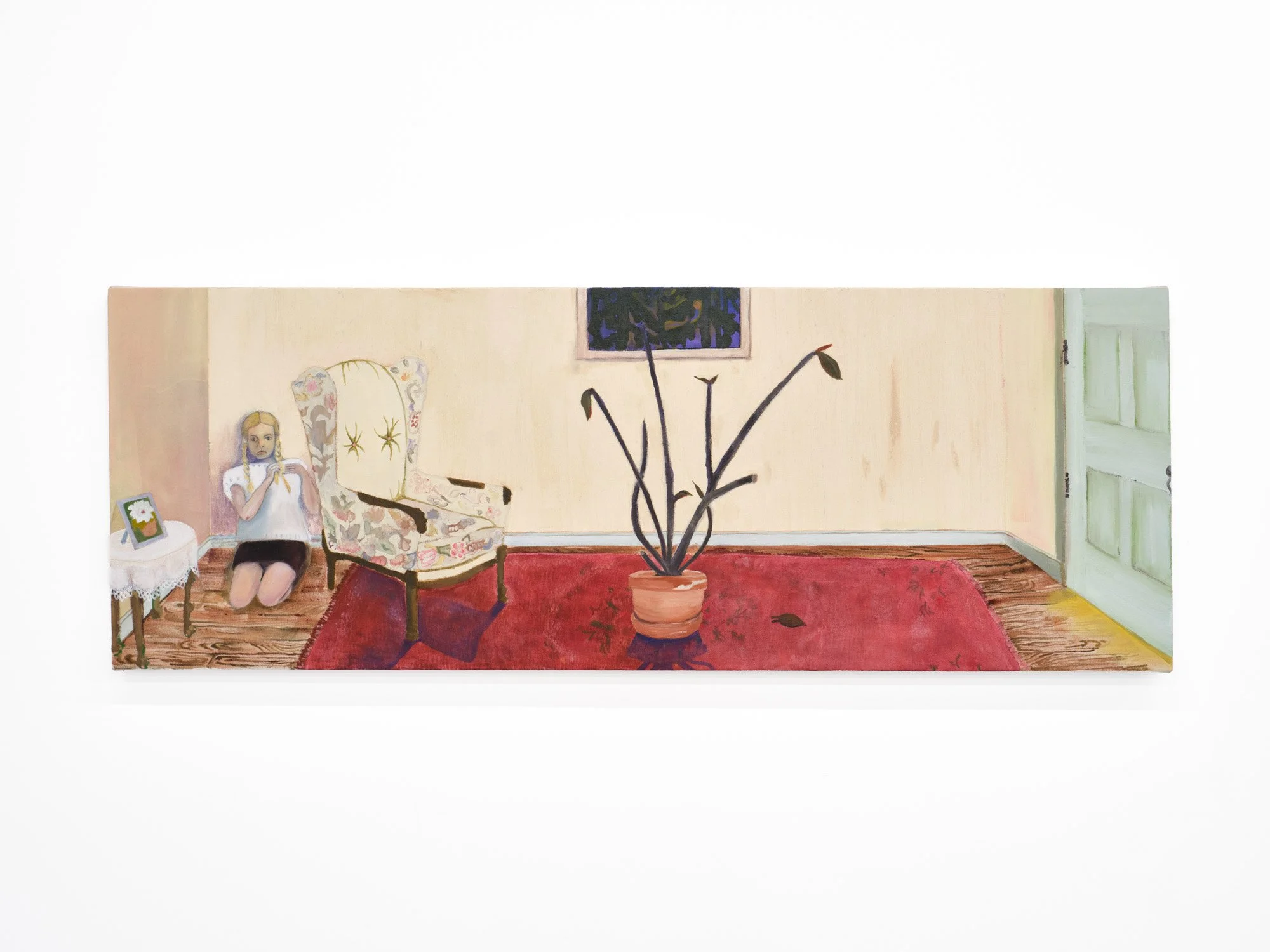
Rowan Howe
Low Light Plants, 2026
Acrylic, watercolor pencil, and oil on canvas
18 x 50 inches
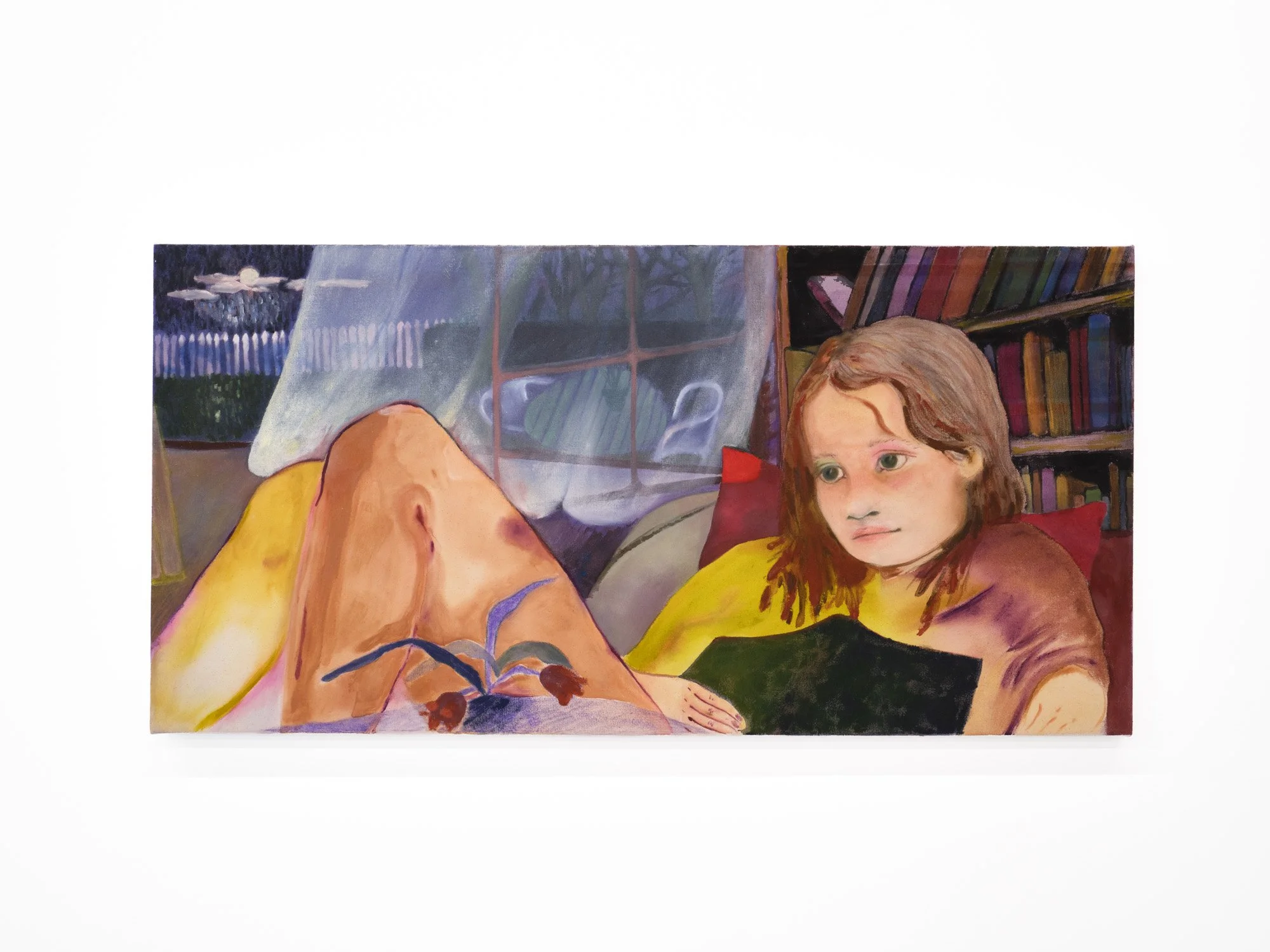
Rowan Howe
Front to Back, 2026
Acrylic, watercolor pencil, and oil on canvas
18 x 36 inches
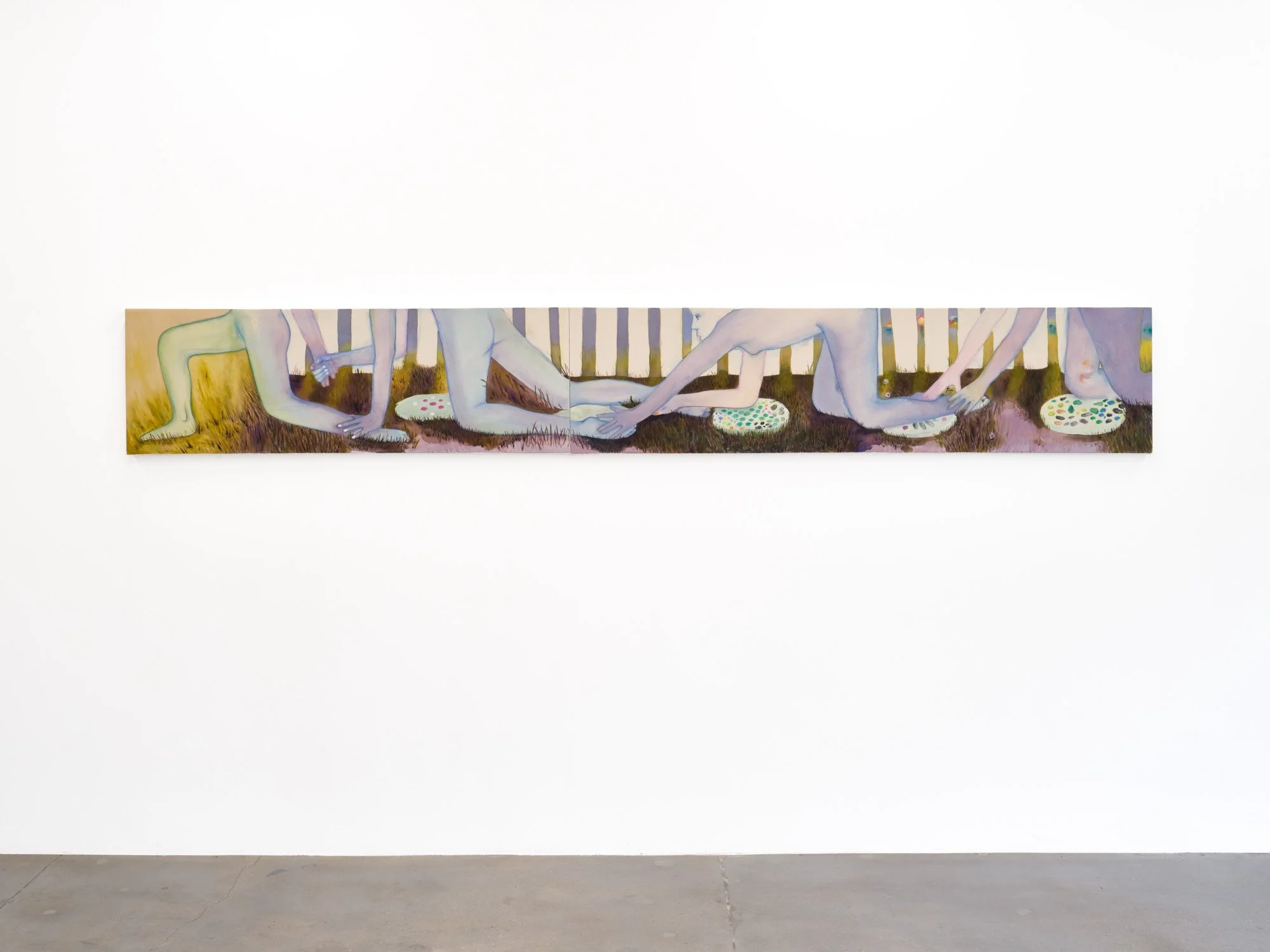
Rowan Howe
Grounders, 2026
Acrylic, watercolor pencil, and oil on canvas
18 x 127 inches