
Wes Thompson Stomping Grounds
January 10, 2026 - February 21, 2026
Hyde Park location
For inspiration, Wes Thompson takes walks. He birds. But not only for inspiration. For appreciation, he communes with the outdoors, with wildlife. Sometimes these journeys breed frustration, frustration at the battle between nature and human intervention, a battle that is socially constructed, that we can find our way out of with the right mindset.
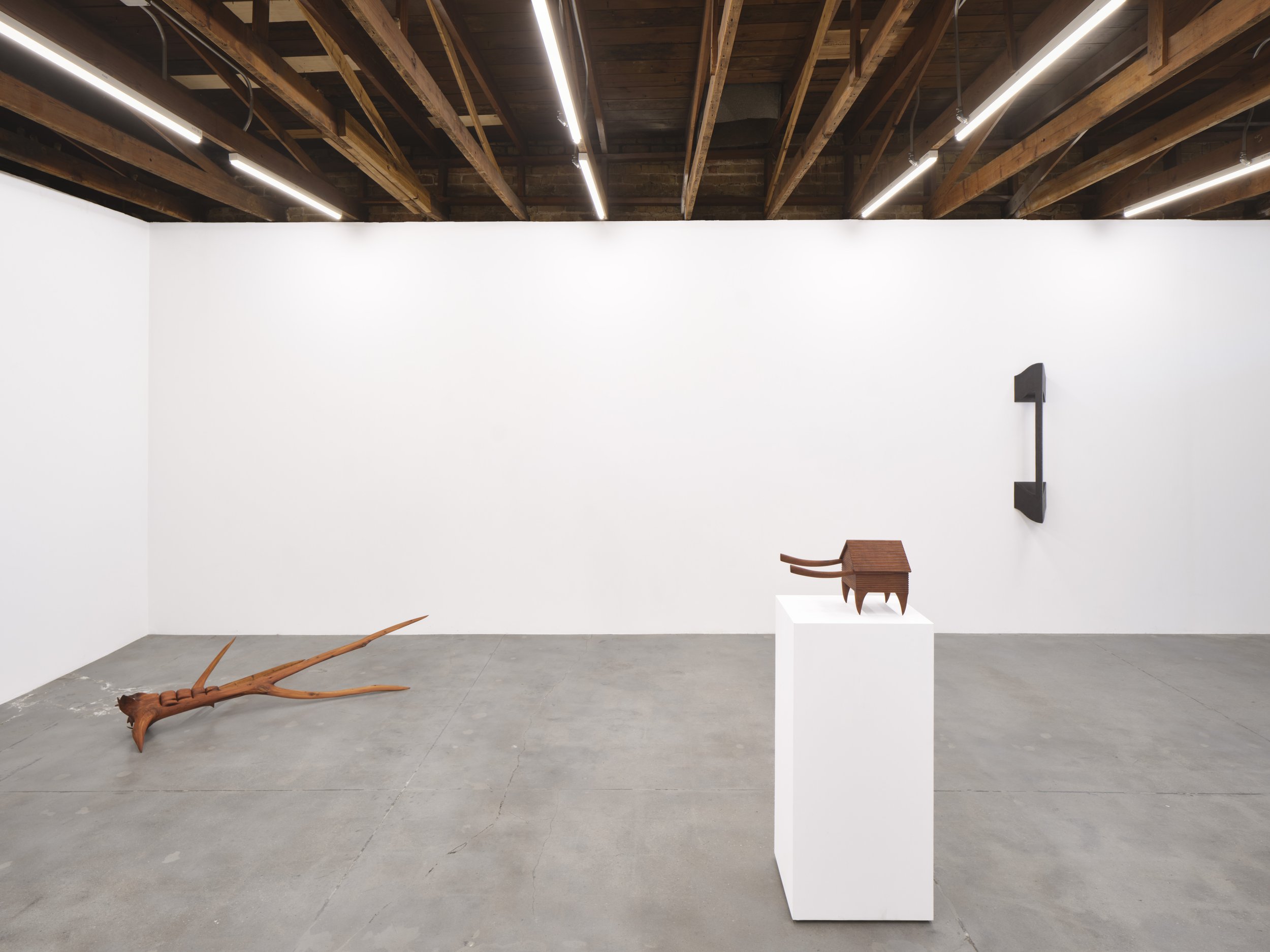
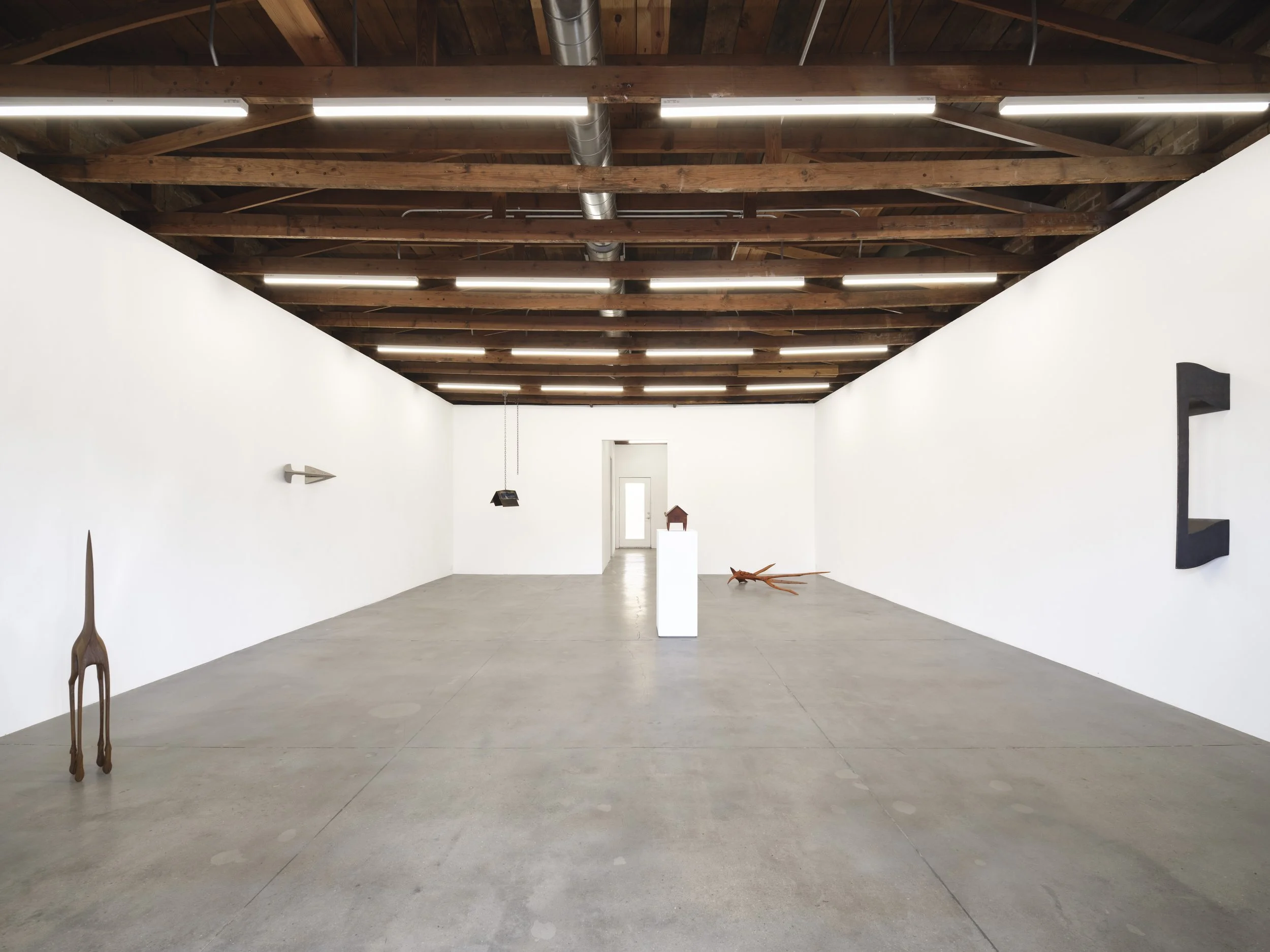
In Stomping Grounds, Thompson’s second solo exhibition with Martha’s, the artist expresses that frustration while offering a model of another way. Humanity is expressed as brutality, such as in Bones and Dust (2025), a house on canines, the chicken legs on Baba Yaga’s hut replaced by objects capable of violence. A deer morphs into a hunting knife in Salt Licked (2025), a stark reminder of the brutality with which we approach nature.
And yet—Thompson also uses knives, carving knives, alongside other tools of the trade, both hand- and power-, to intervene into his materials, which here comprise wood and steel. Human intervention, then, can’t be all bad, can it? The deer in Salt Lick faces death, yes, but that death ensures the survival of another, a human—humans, who have historically shown appreciation for the life taken, using that hunting knife to utilize every part of the animal, acts many humans still do. And nature fights back—canines allow animals to survive, as well.
It’s an ambivalence. In many stories, Baba Yaga is violent, a villain; in others, she is the hero, intervening only to help.
Another intervention—the wood of Salt Lick is known as fumed oak. When wood used to be stored in barns alongside livestock, farmers would notice a change in the color of the wood, leading to the accidental discovery that it was the ammonia in horse urine that caused the change. Furniture makers in the Arts and Crafts movement began fuming wood with ammonia in a sealed chamber, creating a new color that combined natural processes with human intervention.
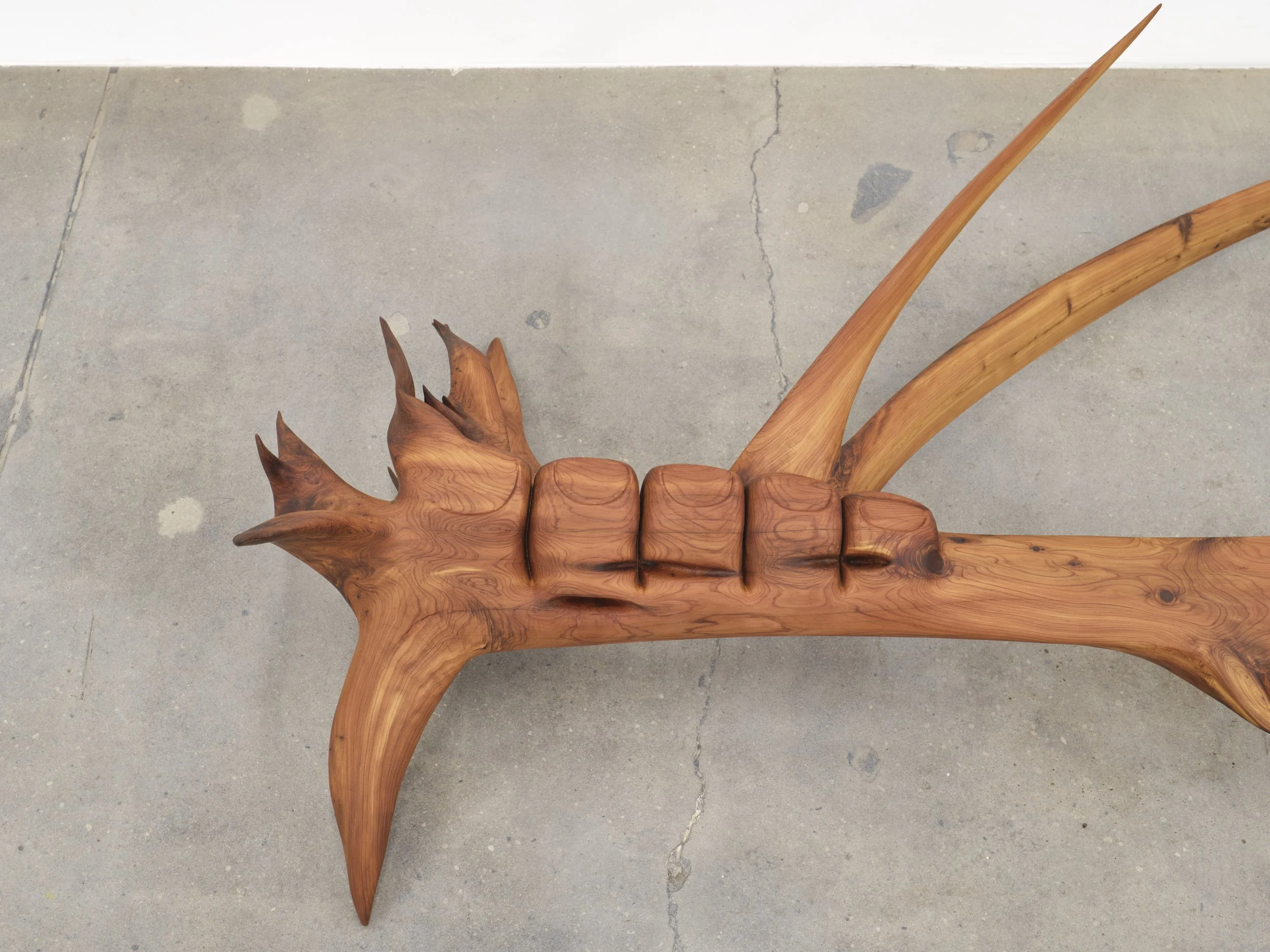
In 2003, the ecofeminist scholar Donna Haraway coined the term natureculture, a neologism that positions the two terms as inextricably co-constitutive, rather than diametrically opposed. Nature vs. culture becomes natureculture; human vs. nonhuman becomes more-than-human. In Rooted (2025), Thompson returns to a familiar motif, the emerging of a human body from a natural material, wood coming from an Ashe juniper, a tree native to central Texas, found decaying, awaiting new life. It invites us to join the more-than-human, to put our own toes in the grass.
Thompson also introduces a new material in Stomping Grounds: steel, a material that makes up three of the six pieces in the show, welded by Thompson himself, who learned welding this past year with the help of a neighbor. Though the use of steel is new for Thompson, it’s less of a departure than a continuation, the smooth sheen he achieves with wood made manifest in a new form.
Two steel works, Flag (2025) and Pelagic (2025) oppose each other, close in form though differing in orientation, situated across the gallery from one another: Flag, darkened with pewter black to an almost opaque patina, obstructs the natural reflective properties of steel (though natural may be a misnomer—an alloy, steel is naturalcultural, a product of human intervention). On the wall facing it, Pelagic displays a highly reflective finish, the product of grinding and sanding. Thompson found the steel after it had spent a decade outdoors, its surface rusted and rough; he pulled from it a mirror. While Flag evokes the image of conquest, of ownership, Pelagic asks the viewer to look at themselves, seeing not only their own reflection but the milieu in which they stand.
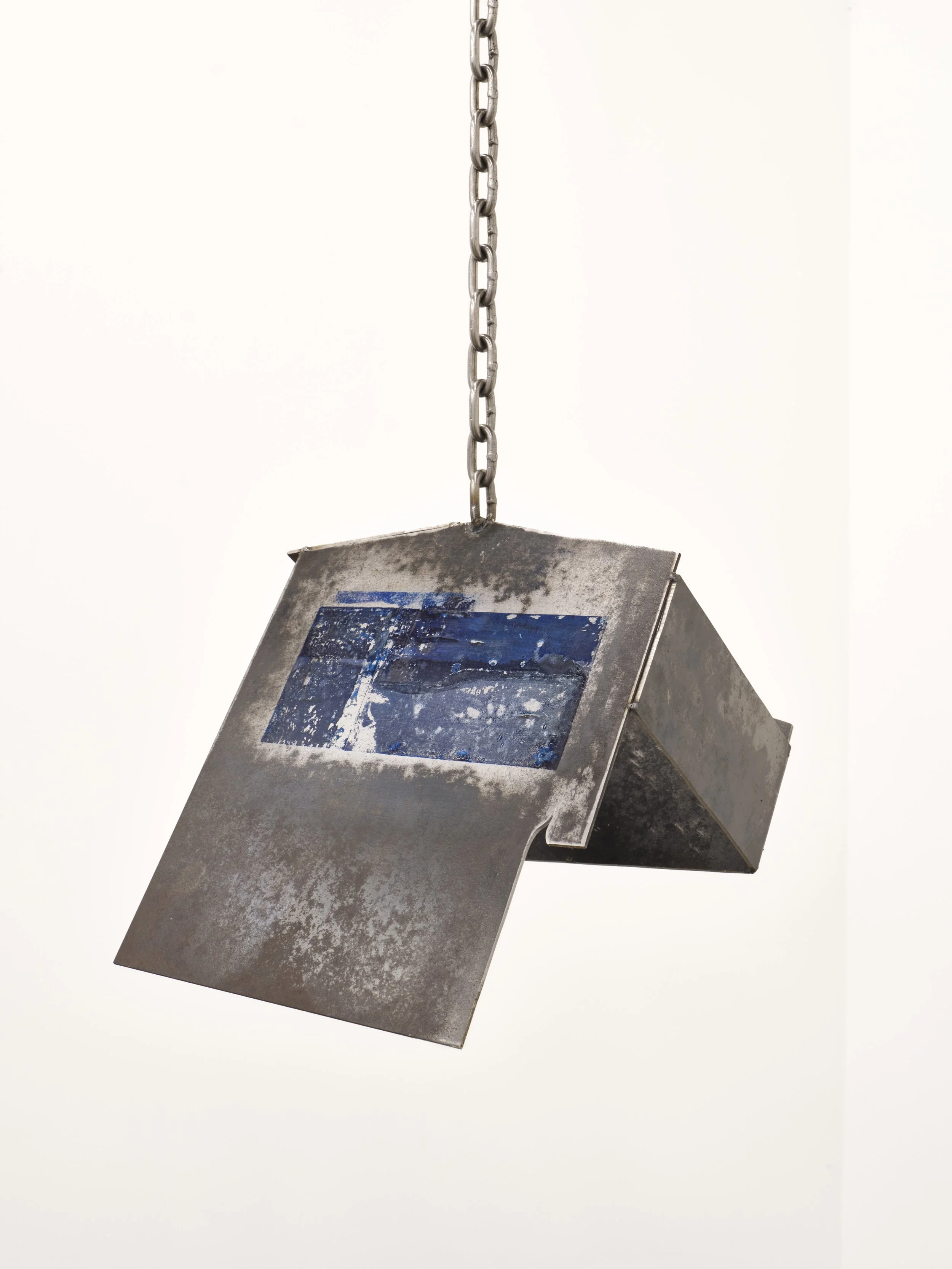
Pond West (2025) offers its own milieu. Printed on this deconstructed house, suspended from the ceiling, the image transfer of a photo of a popular birding location: the water from a wastewater plant. Amid our trash, plants and animals not only survive but thrive, a reminder that nature can and will adapt, can and will prevail despite our worst efforts. When our houses have all fallen, what will remain of us? If we adapt with nature, a new humanity, a more-than-humanity; if we refuse to, perhaps not.
Text by Grace Sparapani
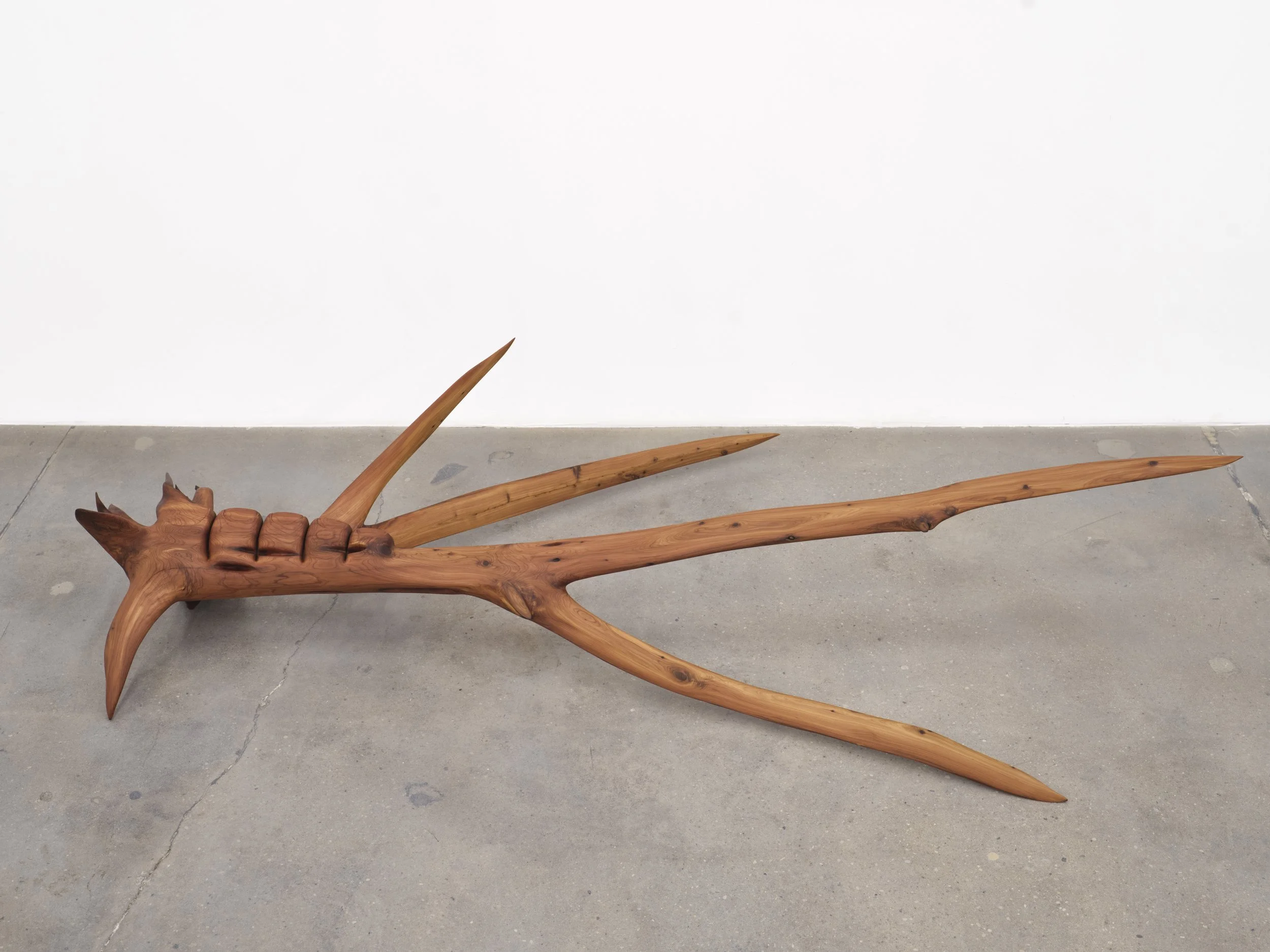
Wes Thompson
Rooted, 2025
Ashe Juniper
13 (h) x 65 (l) x 30 (w) inches
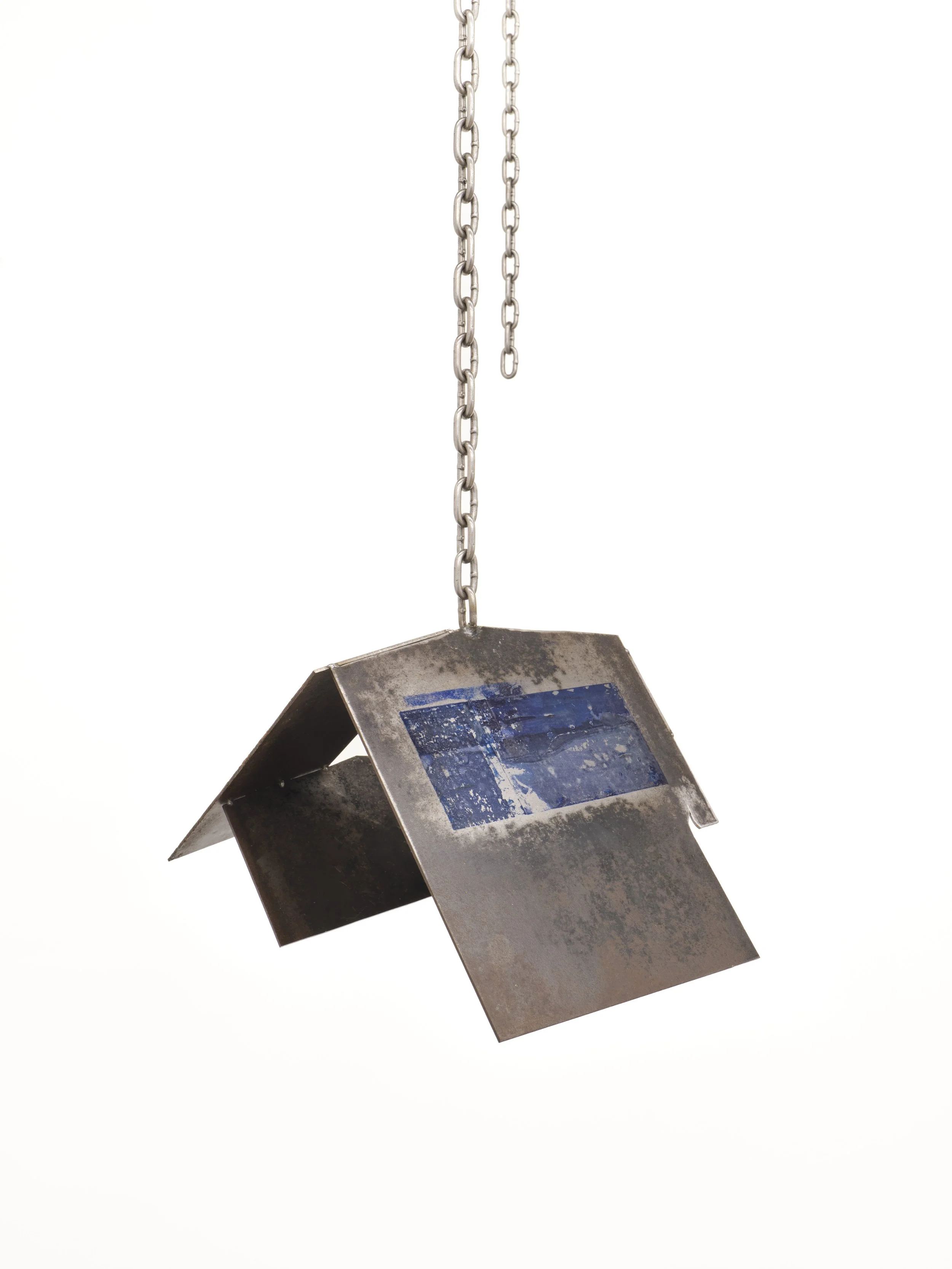
Wes Thompson
Pond West, 2025
Steel and image transfer
13 (h) x 13 (l) x 17 (w) inches
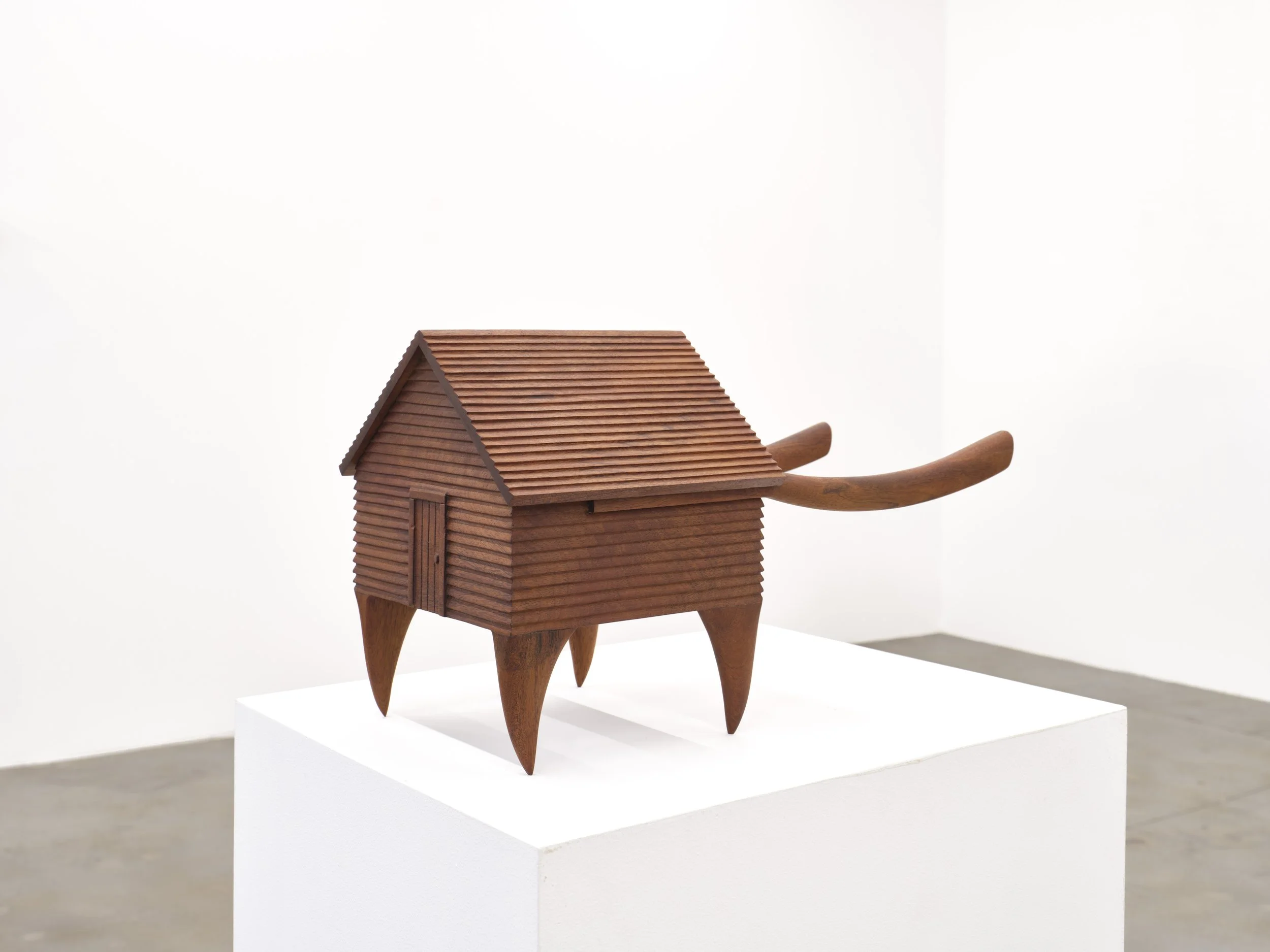
Wes Thompson
Bones and Dust, 2025
Mahogany
9.5 (h) x16 (l) x8 (w) inche
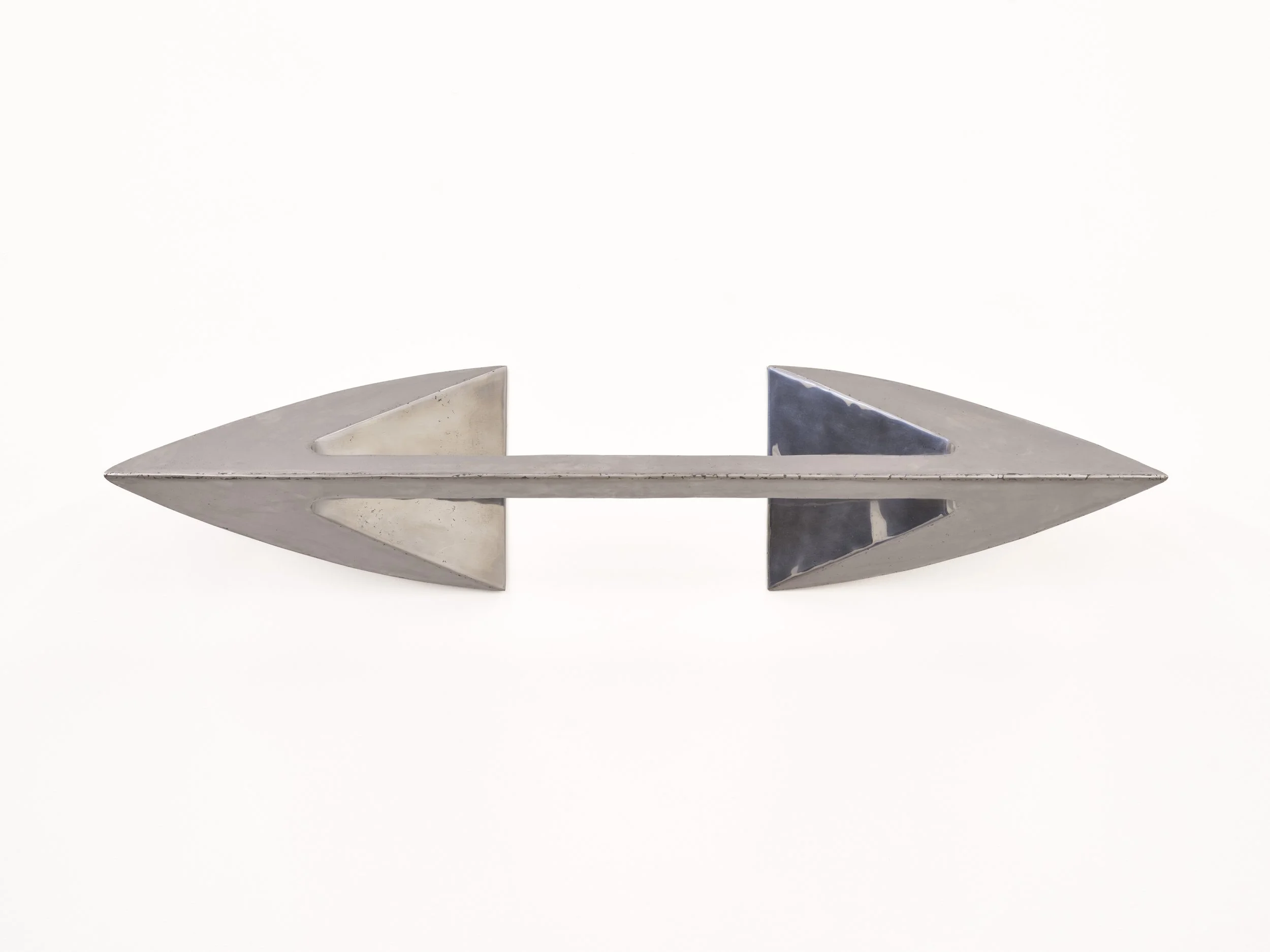
Wes Thompson
Pelagic, 2025
Steel
7 (h) x 32 (l) x 6 (w) inches
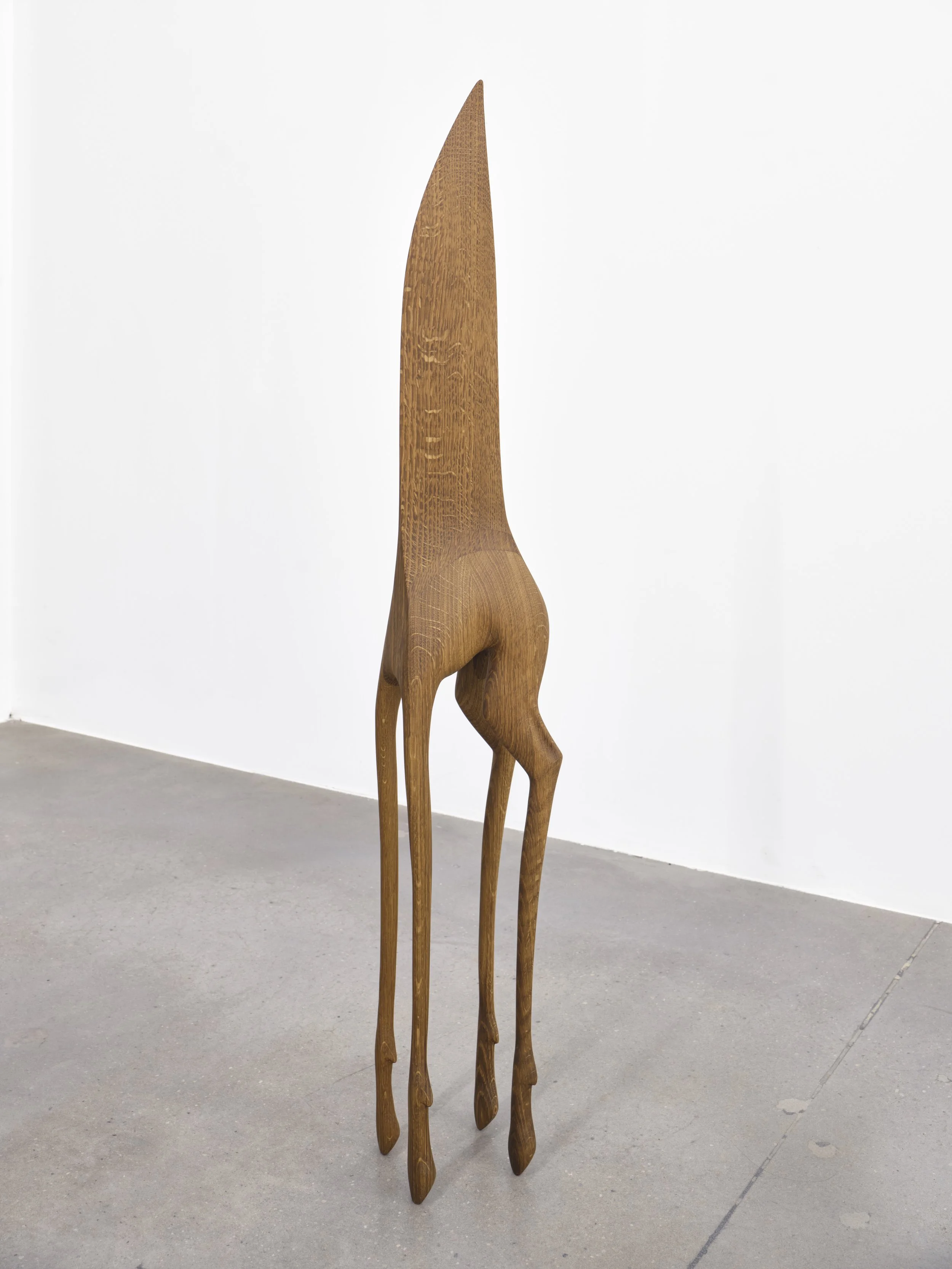
Wes Thompson
Salt Licked, 2025
Fumed White Oak
43(h) x 7 (l) x 3.5 (w) inches
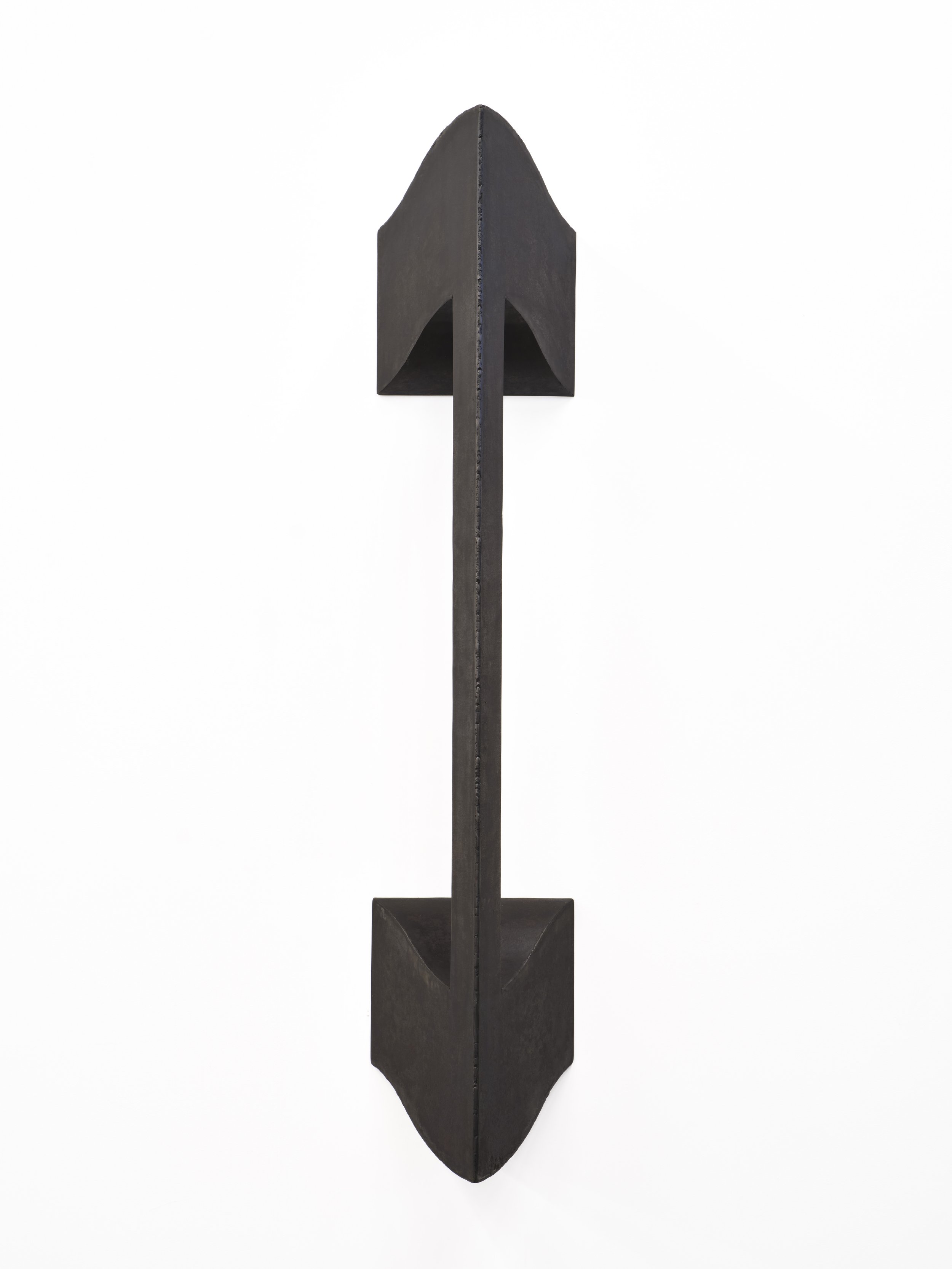
Wes Thompson
Flag, 2025
Steel
45 (h) x 9 (l) x 5 (w) inches